How to Propagate Plants in Water: A Step-by-Step Guide
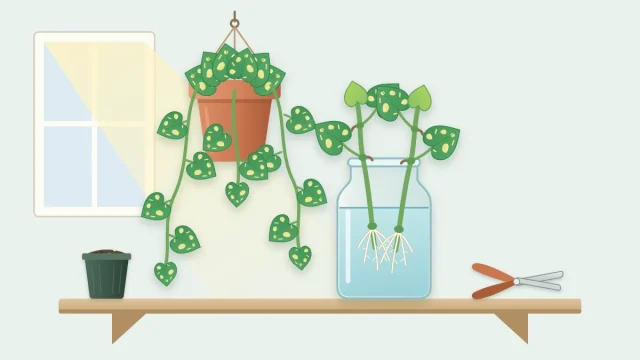
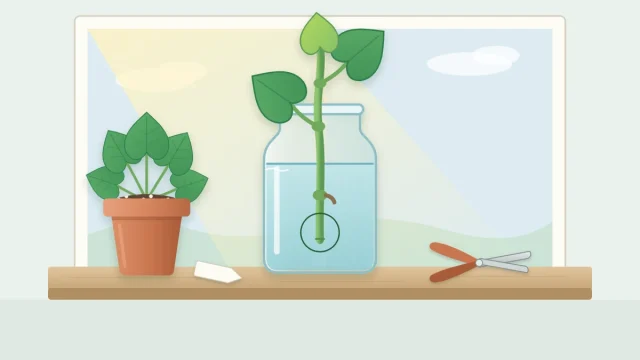
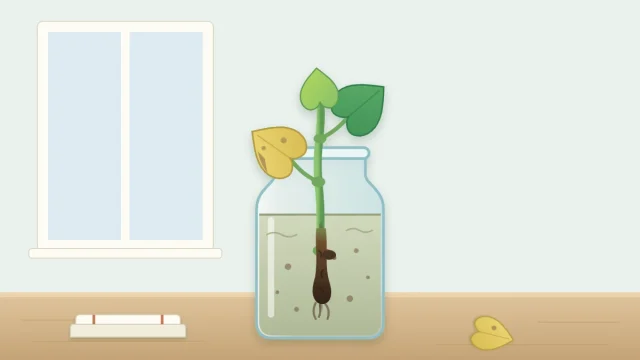
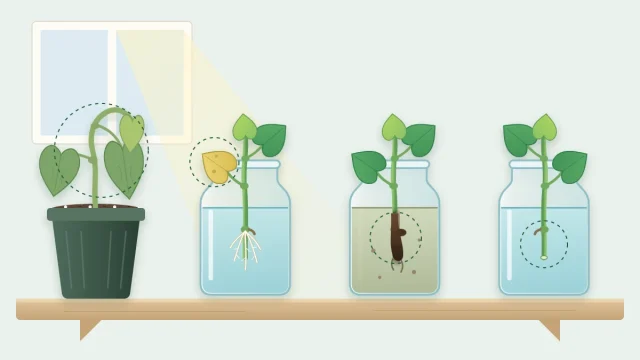
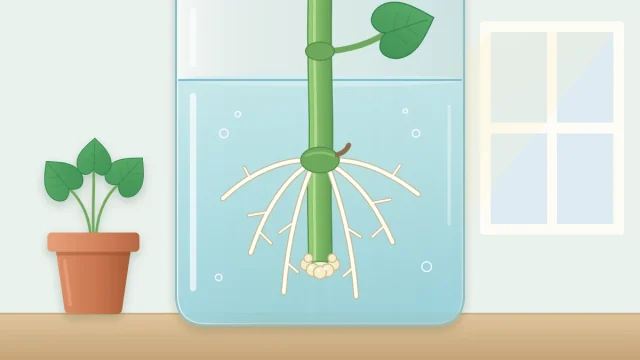
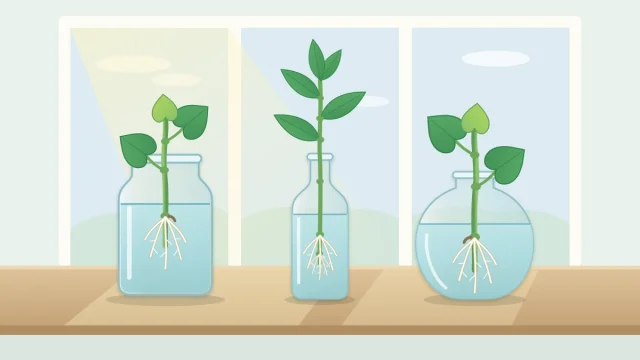
A step-by-step guide to rooting a cutting in a jar of water: where the node goes, how to keep the water fresh, what root growth looks like at each stage and how to tell when it is time for soil.
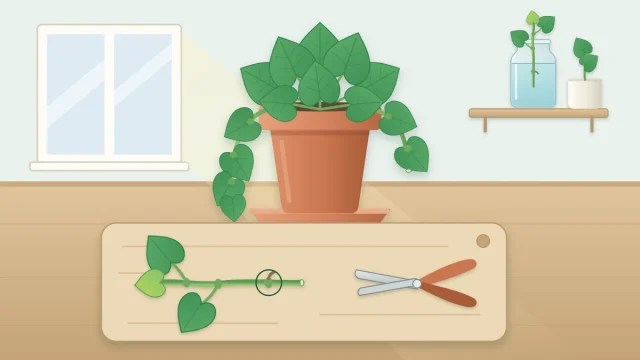
Simple Plant Propagation Guides and Techniques
30 guides published
A step-by-step guide to rooting a cutting in a jar of water: where the node goes, how to keep the water fresh, what root growth looks like at each stage and how to tell when it is time for soil.
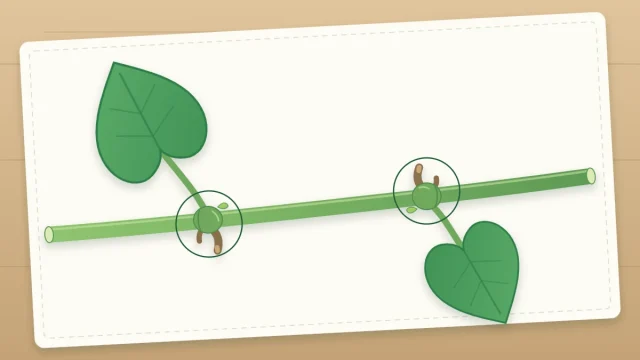
The exact steps for a first stem cutting: which houseplants suit the method, where to cut in relation to the node, which leaves to remove and where to root the piece afterward.
A node is the point on a stem where a leaf attaches, and many cuttings cannot grow without one. Learn how to spot nodes, tell a leaf stalk from a stem, and where to place the cut.
What propagation is, the main methods in plain words, and how to tell which one fits your plant. Includes two gentle first projects and honest expectations about speed and failures.
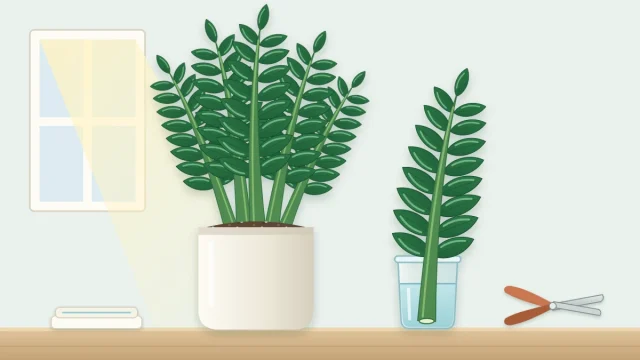
A ZZ plant grows from underground rhizomes, which is why division is the quickest way to a second plant. Stalk and leaflet cuttings also work but are very slow. Here is how to do each and what to look for.
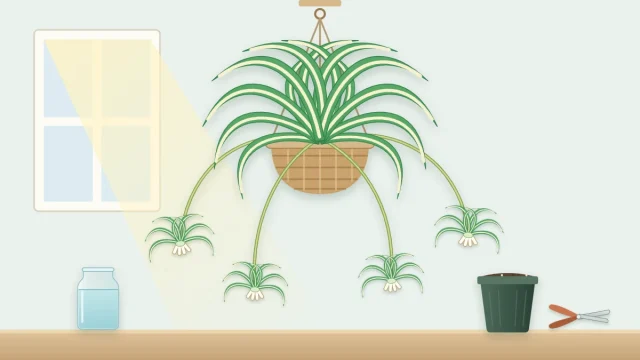
Spider plant babies root readily when you pick ones with root nubs at the base. Here are three ways to root them, how to divide a crowded clump, and why some plants make no plantlets.
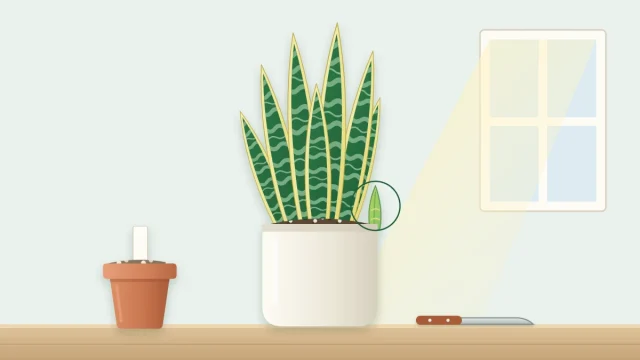
Dividing a snake plant gives a sizable plant that keeps its yellow edge, while leaf sections are slow and usually come back plain green. Compare both methods and follow the division steps.
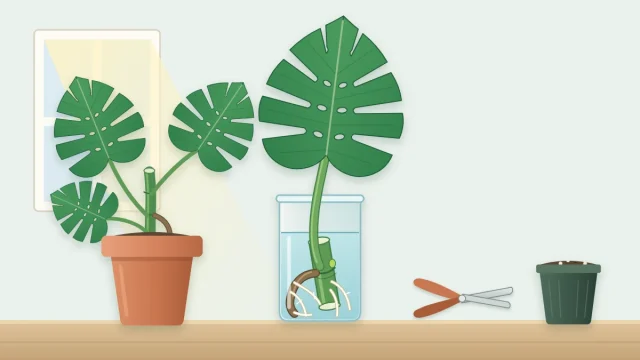
A monstera cutting needs a piece of stem with a node, not just a leaf and its stalk. Learn how to read the stem, where to cut, how to root the cutting in water or moss, and when air layering is the gentler choice.
Pothos grows new plants from stem cuttings that include a node, rooted in water or in moist mix. This guide shows where to cut, what will not work, and how to use rooted cuttings to fill out a thin pot.
A cutting that stays green but shows no roots is often just slow. Here are the checks worth making, from the node and the water line to warmth, light and season, and how to tell when to keep waiting.
How to recognize rot on a cutting, the conditions that commonly go with it in water and in mix, how to trim back to healthy tissue, and when it is better to take a new cutting.
A checklist of the common reasons houseplant cuttings die, from the wrong method and a poor cut to soggy mix, cold and impatience, with a table of signs and first checks.
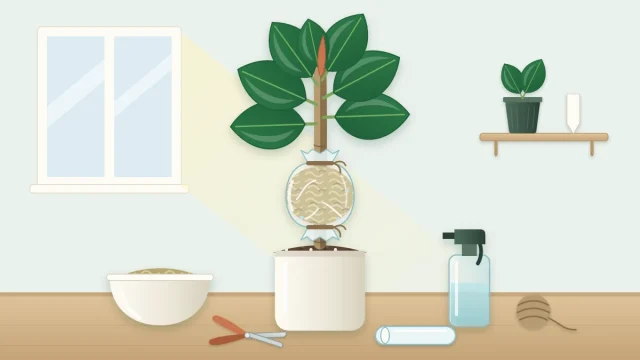
Air layering makes roots form on a stem while it is still attached to the parent. Here is which thick-stemmed houseplants it suits, how to wound and wrap the stem, and when to cut.
What is happening at the cut end while you wait: the wound seals, callus may form, root initials appear and the first white roots branch into a root system.
A plain explainer on rooting hormone: what is in it, which cuttings it may help, why many common houseplants root without it, how it is typically applied, and what to make of kitchen substitutes.
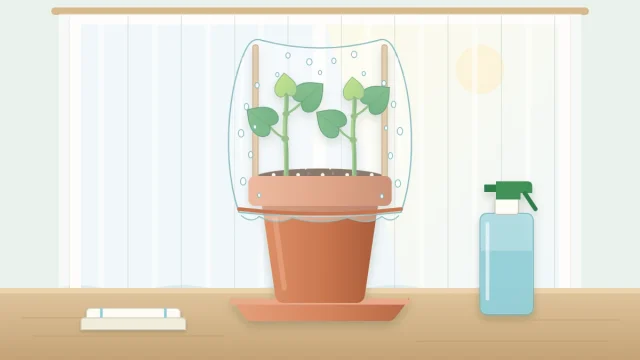
Why rootless cuttings wilt, how to set up a simple humidity cover, which cuttings should never be covered, and how warmth, light and season affect rooting.