How to Make Clean Cuts and Sanitize Propagation Tools
How to cut a stem without crushing it and how to clean your blades between plants, so a cutting starts with a smooth wound and a clean tool.
At a glance
What you need
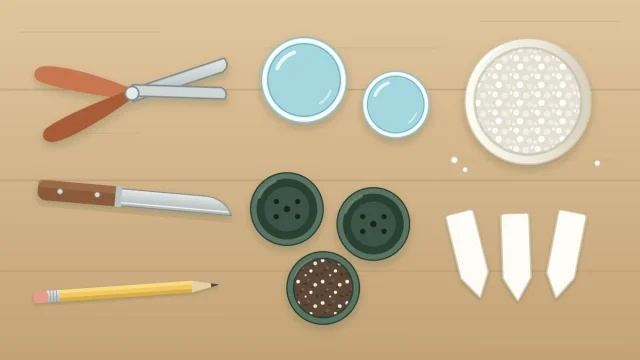
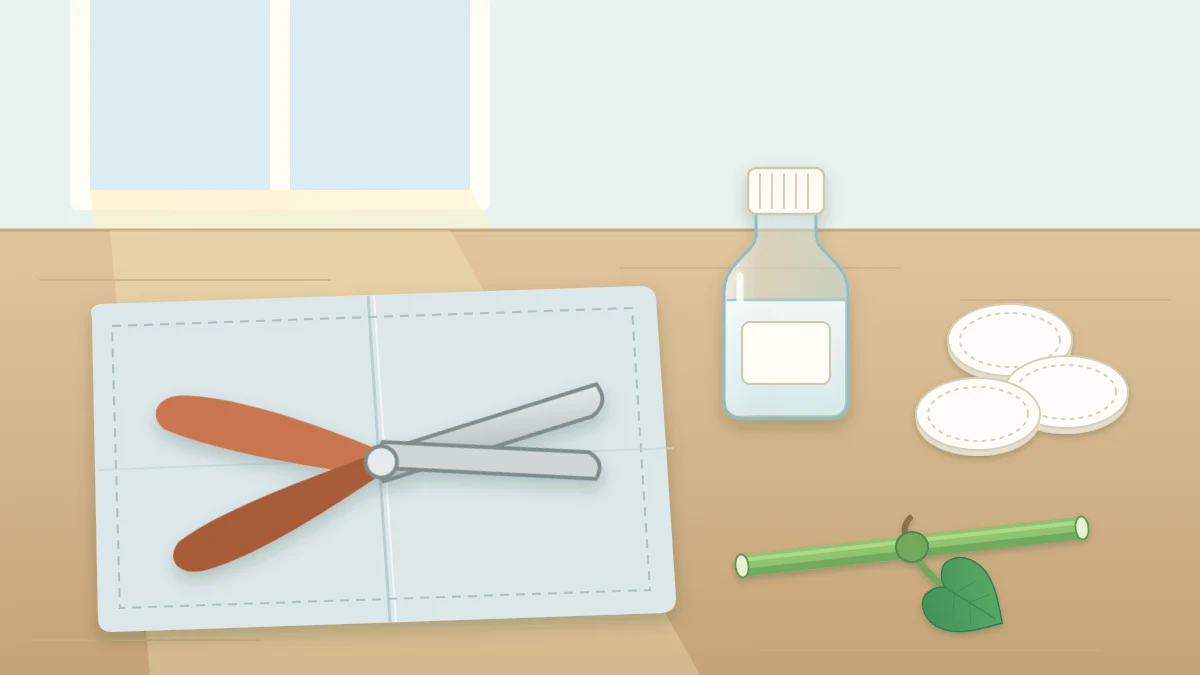
- Sharp bypass snips or scissors
- Clean knife or razor blade
- Rubbing alcohol
- Clean cloth or paper towels
- Stable cutting surface
- Gloves
Rooting speed varies by plant, season and conditions.
Two small habits protect a cutting before it ever reaches water or rooting mix: cutting cleanly, and cutting with a clean blade. Neither takes long, and both are easy to skip when you are eager to get started.
This guide explains how to sanitize propagation tools, how to tell a slicing blade from a crushing one, and how to make the cut itself so the stem is left smooth instead of ragged.
Why a clean cut matters
A cutting has one open wound, and everything it does next happens around that wound. A crushed or ragged cut leaves a zone of damaged tissue, and a dirty blade leaves soil and old sap on it. Both give rot a place to start.
There is a second reason. Blades can carry problems from one plant to the next. If you trim a plant with an unnoticed disease or pest and then take cuttings from a healthy one, the blade is the link between them.

Sharpness: slicing versus crushing
How a tool cuts matters as much as how clean it is.
- Bypass blades slice. The two blades pass each other like scissors, so the stem is cut from both sides and the tissue stays intact. Sharp bypass snips or scissors suit soft stems such as pothos and heartleaf philodendron.
- Dull blades and anvil-type blades crush. An anvil tool presses one blade down onto a flat plate. On a soft stem that squeezes the tissue before it parts. A dull bypass blade does much the same.
- A razor blade or knife suits fleshy stems. Thick, water-filled stems and leaf sections, such as jade plant stems or snake plant leaves, bruise when squeezed between two blades. A single clean edge drawn across them on a firm surface leaves a flat face.
A quick test: cut a sheet of paper. If the tool folds or tears it, it will do the same to a stem. Sharpen it or use a different one. The guide to propagation tools and supplies covers which blade to keep for which job.
How to clean the blade
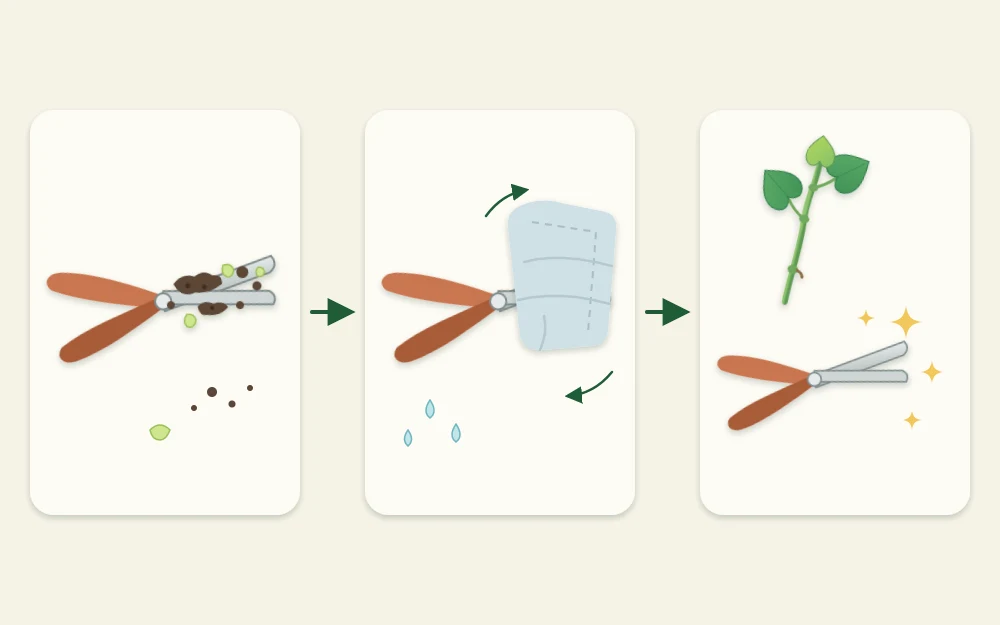
Cleaning has two parts, and the order matters. Disinfecting a blade that is still coated in sap and soil does not work well, because the grime shields whatever is underneath it.
- Wipe off sap and soil. Use a damp cloth or paper towel, and scrub off anything dried on. Open the blades fully so you can reach the inner faces and the pivot.
- Disinfect. Wiping the blades with rubbing alcohol, or dipping them in it, is a method commonly described by extension services. Rubbing alcohol is isopropyl alcohol, usually sold at around 70 percent. Cover both sides of each blade.
- Let it dry. Alcohol needs no rinsing. Give it a moment to evaporate, then cut.
Household bleach solutions are also described by extension sources. Bleach is corrosive to metal, though, and has to be handled exactly as its label directs, so alcohol is the simpler choice for a few houseplant cuttings. For more detail on preparing tools and cuttings, see the NC State Extension Gardener Handbook.
Keep rubbing alcohol away from flames and heat, and follow the directions on the bottle.
Clean between plants, not just between sessions
The point of disinfecting is to stop one plant’s problems reaching another, so the moment that counts is when you move from plant to plant. Keep the alcohol and a cloth beside you and wipe the blades each time you change plants. It adds only seconds. Cleaning once at the start of the afternoon and then working through six plants misses the point.
Making the cut
With a sharp, clean blade the cut itself is quick.
- Choose the spot. For the base of a stem cutting, aim a little below a node.
- Support the stem. Hold it steady with your free hand just above the cut, or lay it on a stable surface such as a clean cutting board. A stem that bends away from the blade tears.
- Cut in one firm motion. Close the snips fully in a single squeeze, or draw the knife through in one stroke. Sawing back and forth, or nibbling at the stem in several bites, leaves a frayed end.
- Check the cut face. It should be smooth and flat. If it is crushed or stringy, recut slightly higher, keeping the node on the cutting.
Where to cut along the vine, how long to make the cutting and which leaves to remove are covered in how to take stem cuttings.
Tip
Cut with the part of the blade nearest the pivot, not the tips. It gives more leverage and a cleaner slice through thicker stems.
Clean containers and fresh mix
The blade is only one of the surfaces a cutting touches. Clean containers and fresh mix belong to the same habit. Wash jars and pots with dish soap and hot water before you reuse them, and rinse well. Start cuttings in fresh rooting mix, not in mix tipped out of another pot, which can carry over whatever lived in it.
Clean tools lower the odds of trouble; they do not remove them. A cutting can still turn soft for other reasons, including a mix that stays too wet or a cool spot. If a stem goes dark and mushy, the guide to why cuttings rot walks through the checks that tell the causes apart.
Sap, skin and hand washing
Wash your hands after handling cut stems. Some plants, including dieffenbachia, pothos, philodendron and euphorbias, have sap that can irritate skin, so gloves are sensible when you cut them. Avoid touching your face while you work, and wipe sap off the blades and the work surface when you finish.
A routine worth keeping
- Test the blade on paper and sharpen or swap it if it tears.
- Wipe off sap and soil, then disinfect with rubbing alcohol.
- Support the stem and cut once, a little below a node.
- Wipe the blades again before the next plant.
- Use clean containers and fresh mix, and wash your hands afterward.
Frequently asked questions
Do I need to rinse rubbing alcohol off my snips before cutting?
No. Rubbing alcohol needs no rinsing. Wipe or dip the blades, give the alcohol a moment to evaporate, and then make your cut. Wipe off sap and soil first, because alcohol works poorly through a layer of grime.
How often should I clean my tools when taking cuttings?
Clean them between plants, not only at the start or end of a session. The aim is to avoid carrying a problem from one plant to the next, so wipe the blades with rubbing alcohol every time you move to a different plant.
Does it matter whether I cut straight or at an angle?
For soft houseplant stems, a smooth cut made in one firm motion with a sharp blade matters more than the angle. What you want to avoid is a crushed or frayed end. Place the cut a little below a node and recut if the face looks ragged.