Offsets and Pups: How to Separate Baby Plants
Aloe, haworthia, snake plant, pilea and bromeliads all make baby plants at their base. Learn how to tell when a pup is ready, how to cut it free and how to pot succulent and leafy pups differently.
At a glance
What you need
- Clean sharp knife or snips
- Small pots with drainage holes
- Gritty mix for succulent pups
- Airy potting mix for leafy pups
- Rubbing alcohol for the blade
Rooting speed varies by plant, season and conditions.
Some plants do the propagating for you. A small copy appears at the base of the parent, grows its own leaves and, given time, its own roots. All that is left is to decide when to detach it and how to pot it. Separating plant pups is a gentle job, but the timing and the handling differ between a fleshy succulent and a leafy plant.
This guide covers the plants that produce these babies, how to tell when one is ready, and how to remove and pot it without setting it back more than necessary.
What offsets and pups are
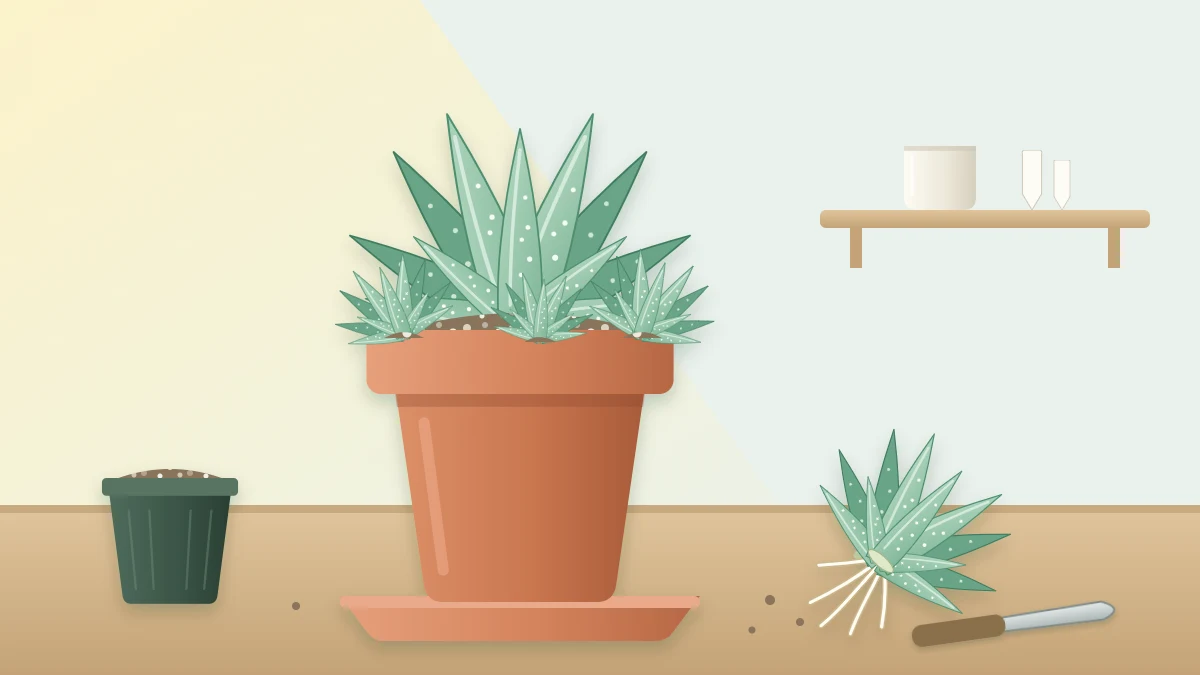
An offset, also called a pup, is a small complete plant that a parent produces at its base or on a short underground stem. It is genetically the same as the parent and starts out fed entirely by it. As it matures it usually forms roots of its own, at which point it can live independently.
The two words mean the same thing. “Pup” is the everyday term for bromeliads, aloes and snake plants, and “offset” is more common for rosette succulents.
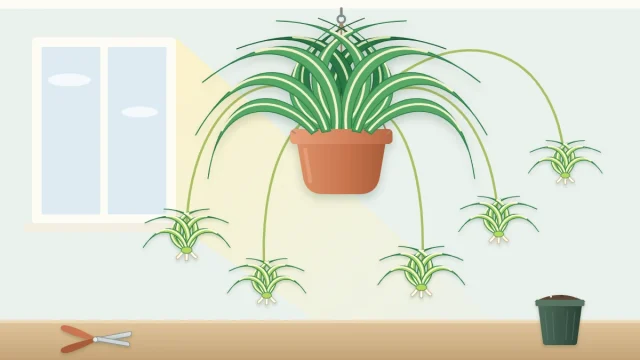
Pups are different from the miniature plants a spider plant carries on long arching stems. Those are covered in the guide to plantlets and runners. They are also different from splitting a whole clump into sections, which is explained in how to divide houseplants.
Plants that make pups
This method applies only to plants that produce offsets. Common ones include:
- Aloe and haworthia: pups rise from the soil around the parent, often in tight clusters.
- Echeveria and sempervivum: small rosettes form around the base, sometimes on short stems.
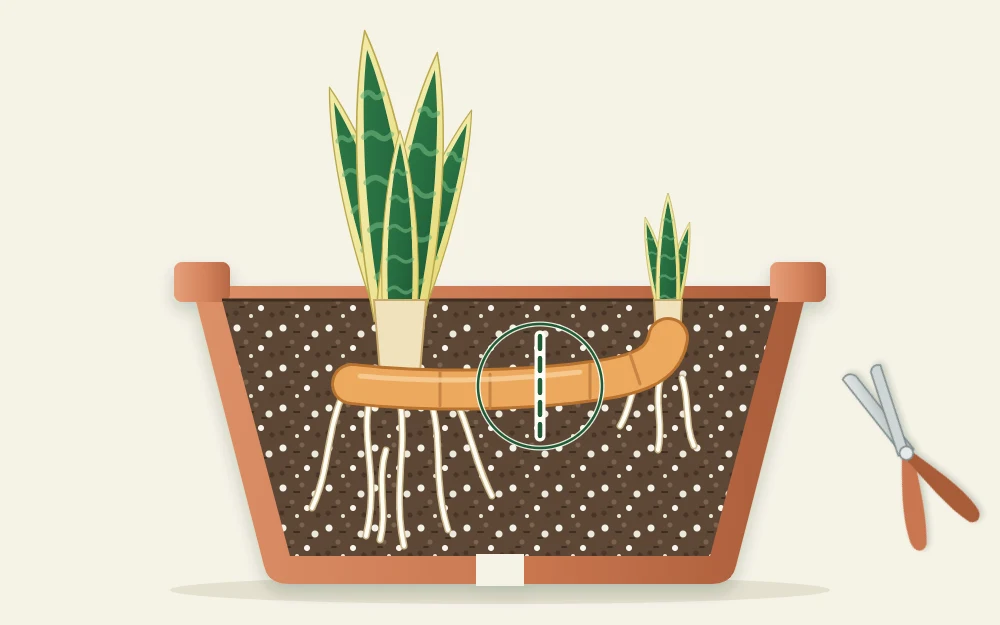
- Snake plant: new shoots emerge from the underground rhizome a short distance from the parent.
- Chinese money plant (Pilea peperomioides): babies appear from the soil and sometimes directly on the main stem.
- Bromeliads: the parent rosette flowers once and then puts its energy into pups at its base.
Some orchids produce baby plants in a different form, which this guide does not cover. A plant that never makes offsets, such as a single-stem rubber plant, cannot be multiplied this way and needs another method.
When a pup is ready to separate
There is no date to go by. Judge readiness by size and development.
A common guide is to wait until the pup is a reasonable fraction of the parent’s size and has either roots of its own or several leaves. For bromeliads, the usual guide is around a third of the parent’s size. A pup of that size has enough stored energy and leaf area to support itself while it settles.
Small rootless pups are riskier. They can survive, but they have little in reserve, and more of them fail. If you are unsure, waiting costs nothing, since the parent keeps feeding the pup for as long as it stays attached.
How to separate a pup
You need a clean, sharp blade, small pots with drainage holes, and a mix suited to the plant: gritty and fast-draining for succulents, an ordinary airy potting mix for leafy plants. Rubbing alcohol wiped on the blade is a cleaning method extension services commonly describe.
- Expose the connection. Either slide the whole plant out of its pot or scrape the mix back from the base of the pup until you can see where it joins the parent.
- Find the pup’s roots. Trace them with your fingers so you know what to keep. Loosen the mix around them rather than pulling.
- Cut the connecting stem. Slice cleanly through the short stem or stolon that links pup and parent. Keep every root attached to the pup. Some pups come away with a gentle twist, but a cut leaves a neater wound.
- Settle the parent. Return it to its pot and fill any gap with mix.
- Pot the pup according to its type, as described below.
Potting succulent pups and leafy pups
This is the step where the two groups part ways, and mixing them up is a common cause of losses.
Succulent pups
Pups of aloe, haworthia, echeveria, sempervivum and snake plant hold a lot of water in their tissue, and a fresh wet cut invites rot. Leave them out of direct sun to dry for a day or more, until the cut surface looks dry and sealed. Then pot them in dry gritty mix and hold off on watering for several days. After that, keep the mix barely moist.
The same dry-first approach applies to single leaves, which is covered in propagating succulents from leaves.
Leafy pups
Pilea pups have thin leaves and lose water quickly, so they should not be left to dry. Pot them straight into lightly moist mix. A pilea pup that came away with no roots can be started in a small glass of water instead, with only the base of its stem submerged, and potted once roots have formed and begun to branch.
Bromeliad pups are potted promptly as well, set just deep enough to stand upright. A tall pup may need a small stake to keep it from rocking while it anchors.
Caring for a newly potted pup
Use a small pot. A pup in a pot that is far too big sits in a mass of mix that stays wet long after watering, which is hard on new roots.
Place it in bright indirect light and water carefully until growth resumes. For leafy pups that means lightly and evenly moist, never soggy. For succulent pups it means letting the mix dry between light waterings.
How fast a pup settles depends on the species, the season, the warmth and light it gets, and how developed it was when you removed it. Watch for a new leaf from the center, or a pup that resists a light tug because roots are holding it. A lower leaf that shrivels in the meantime is common. A base that turns soft and dark is a reason to unpot the pup and check for rot.
Tip
Take pups during active growth, usually spring and summer, and do not remove every pup at once. Leaving one or two attached gives you a backup if the separated ones fail.
Leaving pups where they are
Separating is optional. Leaving pups in place gives you a fuller clump, and many people prefer the look of a crowded pot of haworthia or a pilea surrounded by its babies. The only real limit is space: when the pot becomes packed, the whole group needs a wider one.
Bromeliads are a partial exception. The parent rosette slowly declines after flowering, so the pups are the future of the plant either way. You can separate them once they are large enough, or leave them together and cut the old rosette away when it has faded.
Frequently asked questions
Can I separate a pup that has no roots?
You can, but it is riskier than waiting. A rootless pup has to live on its stored reserves until it forms roots, and more of them fail. A rootless pilea pup can be started in water. A rootless succulent pup is dried first and then set on barely moist gritty mix.
Do I have to remove pups from the parent plant?
No. Leaving pups attached is fine and gives a fuller clump. The parent keeps supporting them, and nothing is harmed by waiting. Eventually a crowded pot needs a wider one. With bromeliads the parent rosette fades after flowering, so the pups take over whether you separate them or not.
Why did my aloe pup turn soft after potting?
A soft, darkening base is often associated with rot, which is more likely when a succulent pup is potted with a fresh wet cut or watered right away. Other causes are possible, including cold. Unpot it, check the base, trim to firm tissue if there is any, and let it dry before trying again.