Moving Water-Rooted Cuttings to Soil: How to Transition
How to pot up a cutting that rooted in a jar: how developed the roots should be, how to fill mix around them without breakage, and how to care for the plant while it adjusts to life in a pot.
At a glance
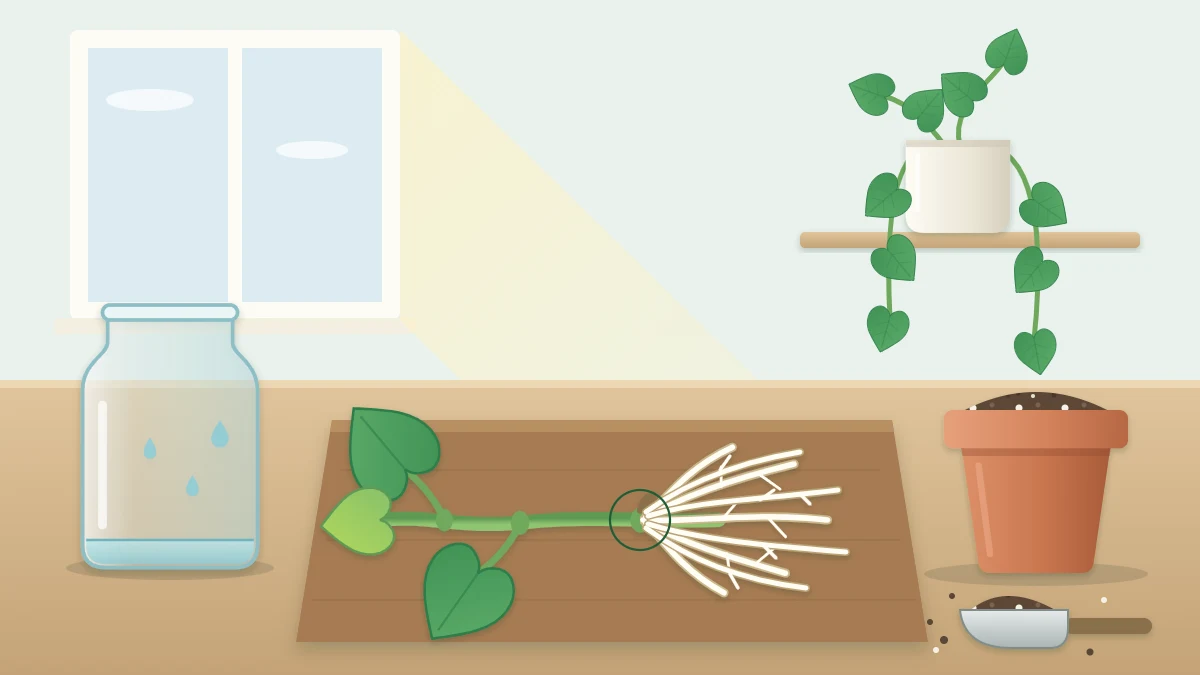
What you need
- Small pot with drainage holes
- Airy potting mix
- Perlite
- Room-temperature water
- Clear bag as a humidity cover
Rooting speed varies by plant, season and conditions.
Your cutting has roots, and now the jar feels safer than a pot. That hesitation is reasonable. Moving water roots to soil is the point where a healthy-looking cutting sometimes sulks for a while, and a few do not make it. Most of that risk comes down to timing and a handful of handling details.
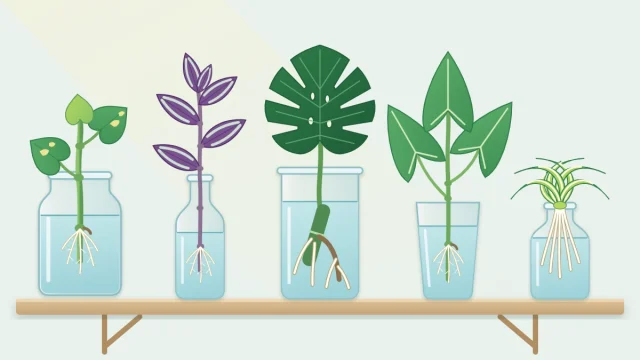
This guide picks up where rooting ends. It assumes you have a cutting from a plant that suits water rooting, such as pothos, heartleaf philodendron, tradescantia or syngonium, sitting in a jar with visible roots. If you are still at the jar stage, start with how to propagate plants in water.
Why the move is a real change
Roots that formed in water are often described as finer and more brittle than roots formed in a potting mix. They have grown with nothing to push against and with water on every side.
The plant has also been living with an unlimited supply. In a pot, water comes and goes, and the roots have to work through a mix that holds air as well as moisture. A short adjustment period is common while the cutting grows roots suited to its new surroundings. Knowing that makes the first couple of weeks less alarming.
When to move a cutting
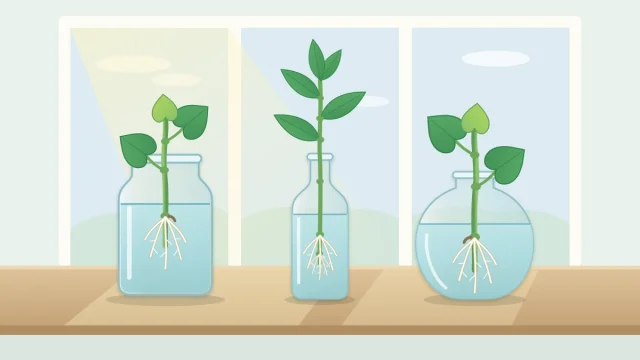
Judge by the roots, not the date. A frequent guide is several roots around 1 to 2 in (2.5 to 5 cm) long that have started to branch. Roots at that stage are developed enough to take up water from a mix and still short enough to handle easily.
- Too early: one or two short, unbranched roots give the cutting very little to work with in a pot.
- About right: several roots with side branches beginning to show.
- Later than ideal: very long, tangled roots are harder to pot without breakage. The cutting can still be moved, with extra care.
If you have the choice, pot up while the plant is in active growth, usually spring and summer.
What you need
- A small pot with drainage holes. It should be only a little wider than the spread of the roots. A large pot holds far more wet mix than a small root system can use.
- An airy mix. A light potting mix opened up with perlite suits most vining cuttings. The guide to rooting mediums for cuttings compares the options.
- Water for moistening the mix and for watering in.
Moisten the mix before you start. It should feel like a wrung-out sponge: damp throughout, with no water running out when you squeeze a handful. Dry mix can shed water at first and leave pockets the roots cannot use.
How to pot a water-rooted cutting
- Add a base layer. Put enough pre-moistened mix in the pot that the cutting will sit at the right height, with the lowest roots resting on it.
- Lift the cutting out of the jar. Support the roots with your other hand so they do not hang and snap. If several cuttings have tangled, swish them apart in a bowl of water.
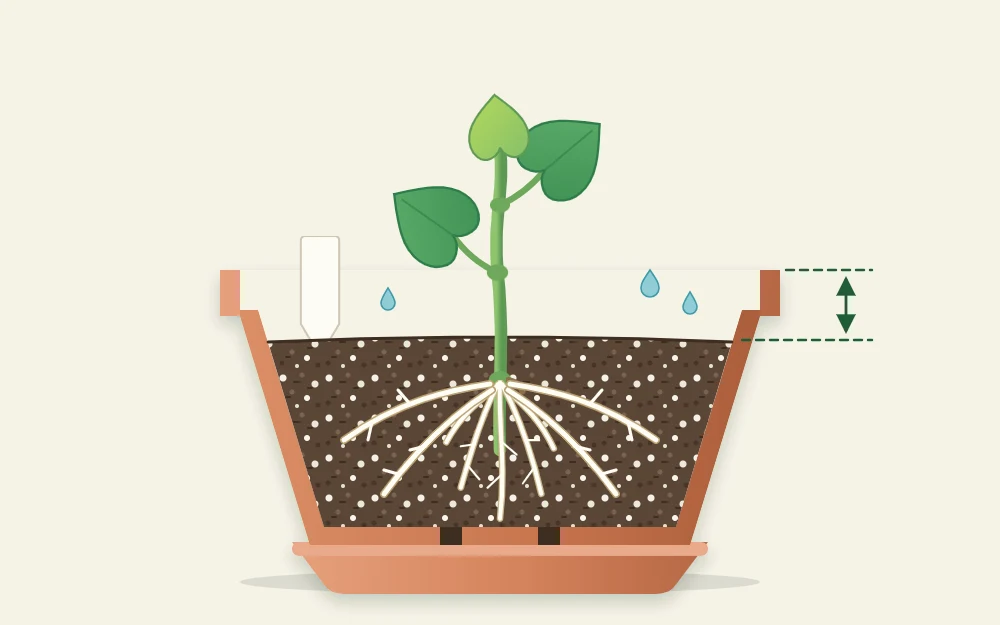
- Hold it in place and fill around the roots. Keep the cutting centered with one hand and sprinkle mix in around the roots with the other. This matters most: do not make a hole and push the roots into it, which bends and breaks them.
- Cover the node. The point the roots grew from should end up just under the surface, with the leaves well clear of the mix.
- Firm lightly. Press gently with your fingertips so the cutting stands up. Packing the mix hard squeezes out the air the roots need.
- Water thoroughly. Water until it runs from the drainage holes. This settles the mix into contact with the roots. Top up any spots that sink.
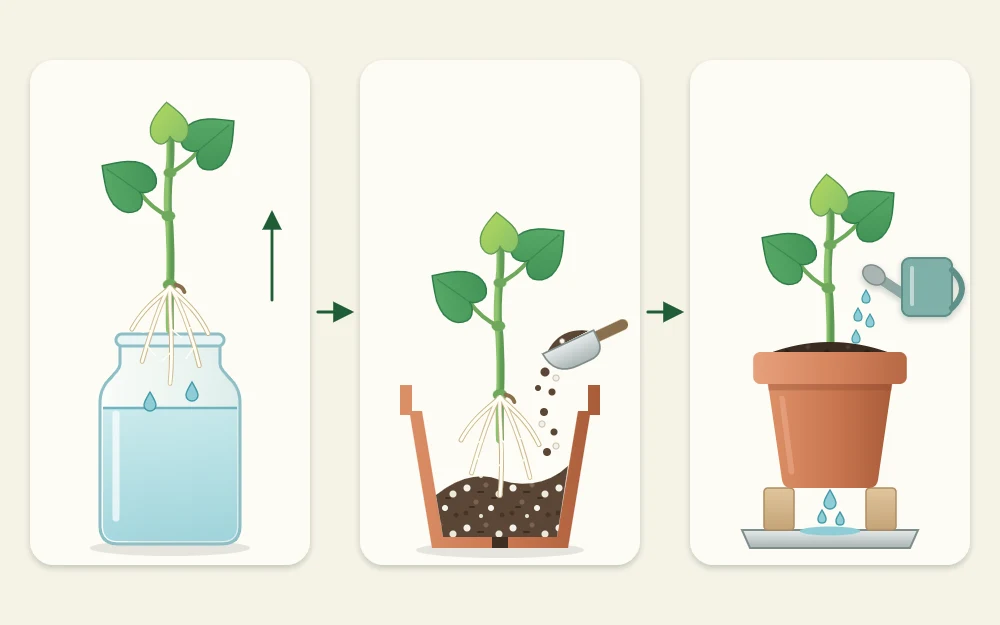
Leave a gap between the surface of the mix and the rim of the pot. That space holds water for a moment while it soaks in instead of spilling over the edge.
The first weeks in soil
The aim is to make the change gradual: start closer to the conditions the roots came from and ease toward ordinary care.
- Moisture: keep the mix more evenly moist than you would for an established plant, without letting it turn soggy. As new growth appears, let it dry a little more between waterings. Check with a finger each time; the pot will tell you more than the calendar.
- Light: bright indirect light. Direct sun asks more of the roots than they can supply at this stage.
- Humidity: thin-leaved plants benefit from some help while they adjust. A loose humidity cover, such as a clear bag propped clear of the leaves and opened daily, is one option.
- Feeding: no fertilizer at first. Wait until the plant is clearly growing.
Tip
Resist tugging the cutting or tipping it out to check the roots. New leaves are the sign you are waiting for, and a firm hold in the pot will follow from that.
What is normal and what is not
Brief drooping after potting is common, and so is the loss of a lower leaf. The cutting is balancing its leaves against roots that are still adapting, and it usually steadies as long as the stem stays firm and the newest leaf holds up.
A stem that turns dark and soft at the soil line is a different matter. It is commonly associated with rot, which is more likely when the mix stays wet and airless. Ease the cutting out and look. If the tissue above the soft part is firm and still carries a node, you can cut back to healthy stem and root it again.
Wilting that does not improve has several possible causes, including mix that is too wet, mix that has dried out, broken roots and too much sun. Feel the mix before you add more water. The article on why cuttings fail goes through the checks that tell these apart.
Planting several cuttings in one pot
A single vine cutting grows into a single trailing stem, which can look thin. For a fuller plant, pot three or more rooted cuttings together, spaced evenly around the pot. Choose a pot that fits their combined roots and no more, and fill around each set of roots in turn.
Use cuttings at a similar stage so that they all want the same amount of water.
Staying in water instead
Potting up is not compulsory. Some plants, pothos and lucky bamboo among them, can be kept in water long-term. That is a different way of growing, with its own routine for fresh water and nutrients, and plants kept this way often grow more slowly than they would in a pot.
What matters is deciding one way or the other. A cutting left in a jar for a very long time builds a large water-grown root system, and moving it to soil later means a bigger adjustment than moving it when the roots were short.
Frequently asked questions
How long should roots be before I move a cutting to soil?
A frequent guide is several roots roughly 1 to 2 inches (2.5 to 5 cm) long that have started to branch. Length alone is not the test: one long unbranched root is less useful than several shorter ones with side roots. Very long tangled roots can still be potted, but they break more easily.
Why is my cutting drooping after I potted it?
Some drooping right after potting is common, because water-formed roots need time to adapt to a mix. Keep the mix evenly moist and the plant out of direct sun. If it does not improve, check whether the mix is soggy or dry and whether the stem is still firm at the soil line.
Can I leave my cutting in water permanently?
Some plants, including pothos and lucky bamboo, can be kept in water long-term. It is a different way of growing that needs regular fresh water and some nutrients, and growth is often slower. If you plan to pot the cutting eventually, it is better to do it while the roots are still short.