Rooting Media Compared: Perlite, Coir, Moss and Potting Mix
What a rooting medium has to do, how perlite, vermiculite, coir, moss, potting mix and gritty blends compare for water and air, and a few simple blends to start from.
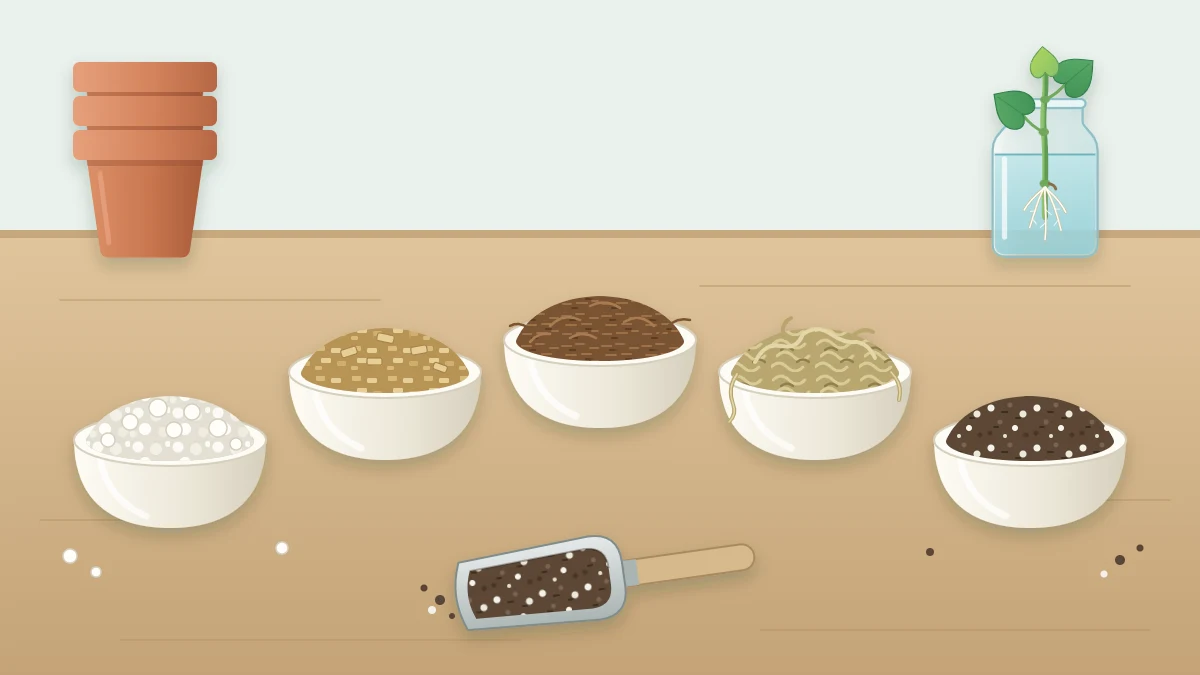
Ordinary potting soil is what most people reach for, and it is often the heaviest option on the shelf. A good rooting medium for cuttings looks quite different: light, open, and close to empty of nutrients.
This comparison explains what a rooting medium actually has to do, sets the common materials side by side, and gives a few blends to start from. None of them is the single right answer. The useful question is which one matches the plant you are rooting and the way you tend to water.
What a rooting medium has to do
A cutting has no roots yet, so the medium has a short and specific job list.
- Hold moisture against the stem. The buried part must not dry out while roots are forming.
- Hold air at the same time. Stem tissue and new roots need oxygen. A medium with every gap full of water invites rot.
- Support the cutting. It should keep the stem upright and still, with the node in contact with the medium.
- Start out clean. A fresh cut is an open wound, so the material around it should not bring in decay organisms.
Feeding is not on the list. A cutting has no roots to take up nutrients with, so a rooting medium does not need to feed it. Nutrition starts to matter after potting up, once there are roots to use it.
Common rooting media compared
The table sums up how each material handles water and air. The ratings are relative, and how you water changes the result as much as the material does.
| Medium | Holds water | Holds air | Good for |
|---|---|---|---|
| Perlite | Low to moderate | High | Lightening other materials; cuttings prone to rot |
| Vermiculite | High | Moderate | Blends that need to stay moist longer |
| Coconut coir | High | Moderate | The moisture-holding half of a blend with perlite |
| Peat-based seed-starting or potting mix | High | Moderate, lower when packed or kept wet | Leafy cuttings, usually with extra perlite |
| Long-fiber sphagnum moss | High | Good when packed loosely | Thick stems and aerial roots, kept damp |
| Coarse sand or pumice blends | Low | High | Succulents |
| Plain water (for comparison) | All water | Only the oxygen dissolved in it | Soft-stemmed vines that are known to root in a jar |
Water is in the table because it makes the point clearly. It gives constant moisture and no support, and the only air is what is dissolved in it, which is why the water in a jar needs changing and why some plants rot in it.
Starting blends to adjust
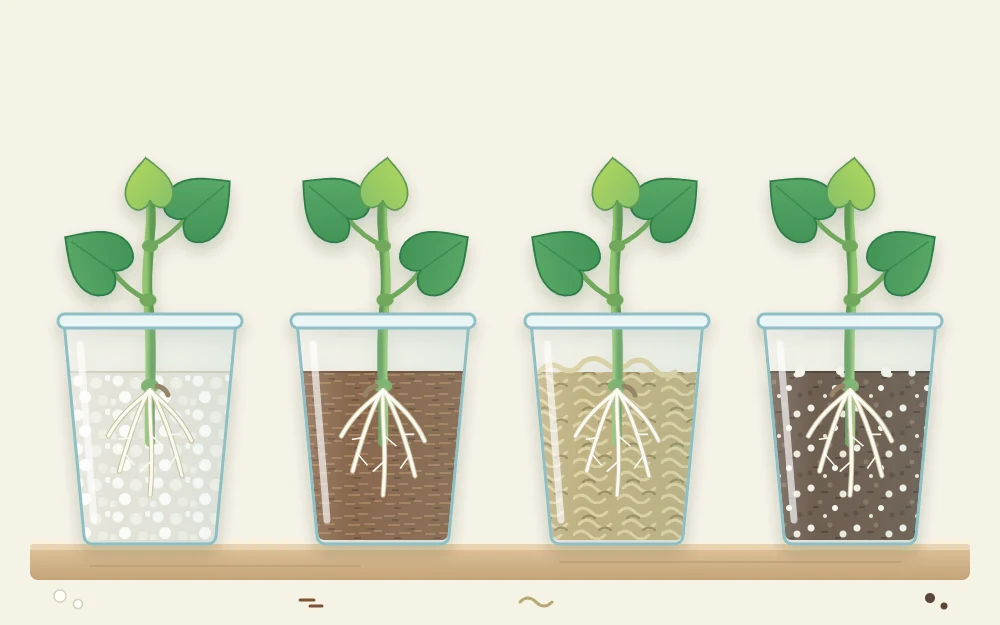
Most growers mix two materials: one that holds water and one that holds air. Treat these as starting points, not recipes, and adjust them to your room and your watering habits.
Potting mix lightened with perlite
For leafy cuttings, a common starting point is a peat-based or seed-starting mix combined with roughly an equal part of perlite. The mix holds the moisture and the perlite keeps the gaps open. If the pot still feels wet long after watering, add more perlite next time.
Perlite with coir or peat
A blend of perlite with coir or peat, and no potting soil at all, is lighter still. It drains fast and is hard to overwater, though it also dries sooner, so it needs checking more often.
Gritty mix for succulents
Succulent cuttings and leaves want a medium that holds very little water: coarse sand or pumice blended with a small share of potting mix. It is kept barely moist, not evenly moist. The guide to propagating succulents from leaves explains how that method differs from leafy cuttings.
Whichever blend you pick, the potting steps are the same, and they are set out in the guide to rooting cuttings in potting mix.
Why garden soil and old mix are poor choices
Soil dug from the garden is dense. In a small pot it packs down, drains slowly and leaves little air around the stem. It may also carry disease organisms, weed seeds and insects that an established outdoor plant tolerates and an open cut does not.
Old mix reused from another pot has similar drawbacks. Its structure has usually broken down into finer particles that hold more water and less air, and it may carry whatever troubled the last plant. For rooting, fresh material from an unopened or well-sealed bag is the safer choice, along with pots that have been washed.
Why heavy potting soil kept wet leads to rot
Straight potting soil is made for plants with working roots that pull water out of it day after day. A cutting cannot do that. With nothing drawing the water down, a heavy mix around a rootless stem stays saturated, the air spaces fill, and the buried tissue sits wet and short of oxygen.
That combination is a common cause of cuttings rotting at the base. It is not the only one, since cold, a damaged cut or buried leaves can all play a part, but it is among the easiest to fix. A lighter blend and a smaller pot both help.
The moisture target: a wrung-out sponge
For leafy cuttings, aim for a medium that feels like a wrung-out sponge: damp all the way through, with no water running out when you squeeze a handful. Moisten it before you fill the pot, because dry peat and coir can shed water at first.
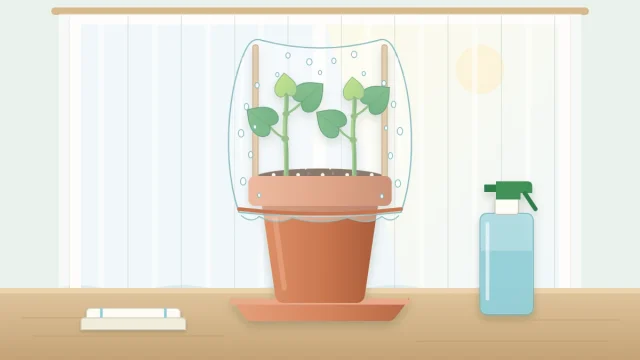
After that, check by touch. A lighter pot and a dry surface suggest it is time to water lightly. A humidity cover slows drying a great deal, so covered pots need water far less often. See humidity and warmth for cuttings for when a cover helps and when it does harm.
Tip
A clear cup with holes punched in the base lets you see both moisture and roots through the side, which takes some of the guesswork out of rooting in a medium.
Notes on sphagnum moss
Long-fiber sphagnum moss behaves differently from the loose materials. Soak it, then squeeze it out firmly, so that it is damp and not dripping. Pack it loosely around the node. Pressed tight, it holds too much water and too little air.
The other point comes at potting time. Roots grow through the strands and can tangle in them. Tease away what comes off easily and leave the rest attached, since pulling hard breaks the roots you waited for.
Frequently asked questions
Can I root cuttings in perlite alone?
Some growers do. Perlite on its own holds a lot of air and only a modest amount of water, so it dries quickly and needs checking often. It also offers no nutrition, which is fine while a cutting is rootless, but the young plant should be potted up into a regular mix once it has roots.
Does a rooting medium need fertilizer in it?
No. A cutting without roots has no way to take nutrients up from the medium, so a rooting mix only has to supply moisture, air, support and a clean start. Nutrition becomes relevant after the cutting has rooted and been moved into ordinary potting mix.
Is it fine to reuse old potting mix for cuttings?
It is a poor choice. Used mix has usually broken down into finer particles that hold more water and less air, and it may carry disease organisms from the plant that grew in it. A fresh cut is vulnerable, so new material and washed pots are the safer starting point.